AI Vending vs. Traditional Vending: What Actually Changes for an Operator
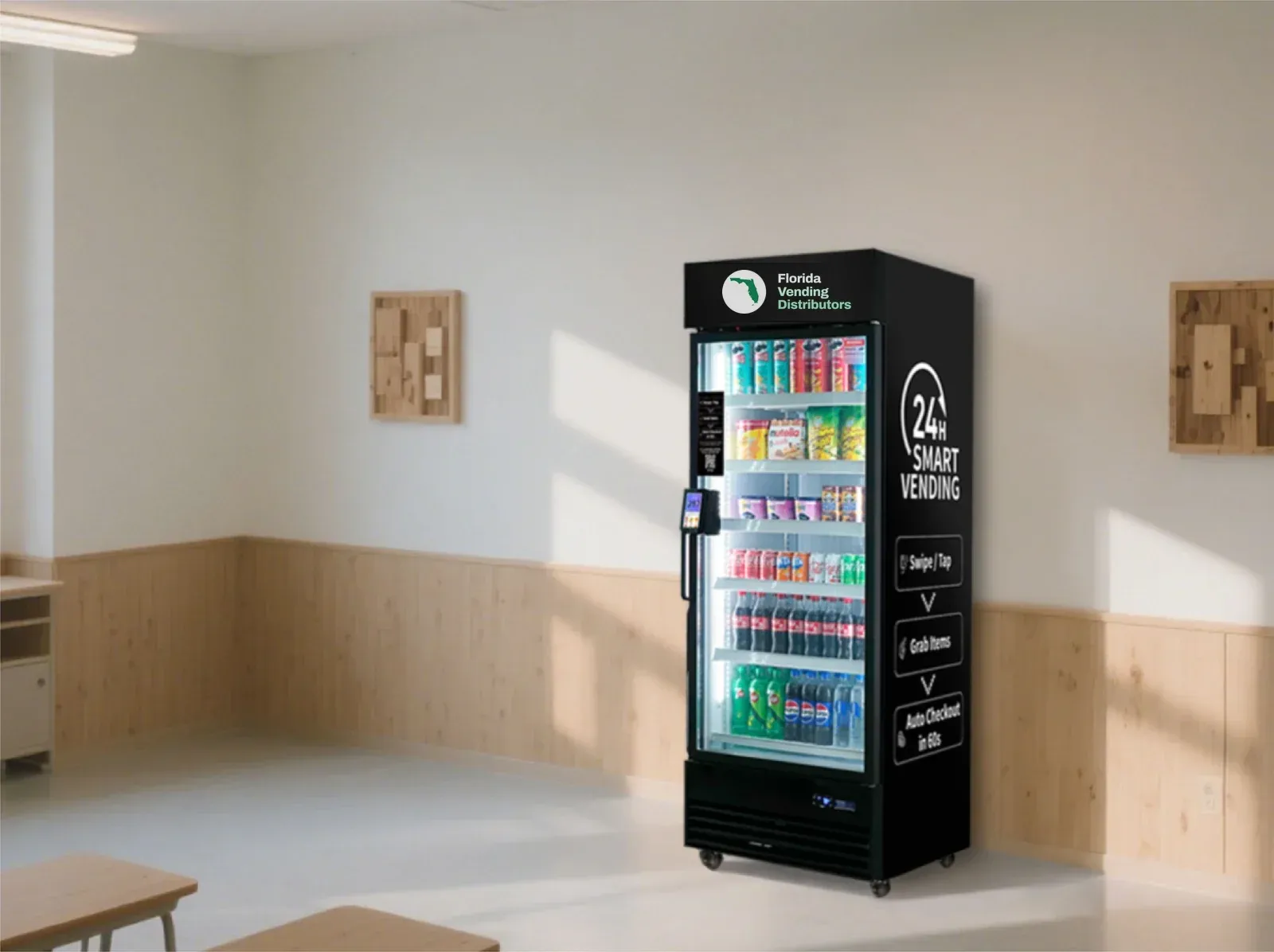
- Cashless
- every sale on a card or phone
- Live
- sales and stock data on your phone
- $2,999
- HAHA AI smart coolers from
Our smart cooler vs. traditional machine guide covers which machine fits a location. This one is about the business behind it: what changes in your week when a route moves from spirals to AI.
What you can sell
A traditional machine sells what fits a coil or an elevator slot: chips, candy, cans and bottles, one at a time. An AI cooler is a shelf behind a glass door, so it also sells the things that move margin in a breakroom: sandwiches, salads, meal-prep containers, energy drinks in multi-packs, and full-size snacks.
Customers also buy more per visit. Taking a drink and a snack in one tap is normal at a cooler and impossible at most spiral machines.

How you get paid
Traditional machines collect cash and coins, plus cards if you add a reader. Someone has to empty the cash box, count it and take it to the bank.
AI coolers are cashless. Every sale is a card or phone payment, deposited to your account, with a record of exactly what sold. There’s no coin mech to jam and no cash to collect.
Restocking
Restocking a spiral machine means loading each coil and testing each selection. Restocking an AI cooler means putting product on a shelf, front-facing, the way a store does. Because the cooler reports what sold, you arrive knowing what to bring instead of finding out at the machine.
What breaks
Spiral machines fail in mechanical ways: a coil jams, a motor dies, a bill validator rejects notes. An AI cooler has no vend mechanism to jam. What it depends on is power, refrigeration and a data connection, so a strong cellular signal or Wi-Fi at the location matters.
What you can see from your phone
A traditional machine tells you what sold when you visit it, unless you add telemetry. An AI cooler reports every sale as it happens: which items, at what time, and what’s running low. That makes it easier to change prices, test new products and plan routes around the machines that need you.
Cost to get started
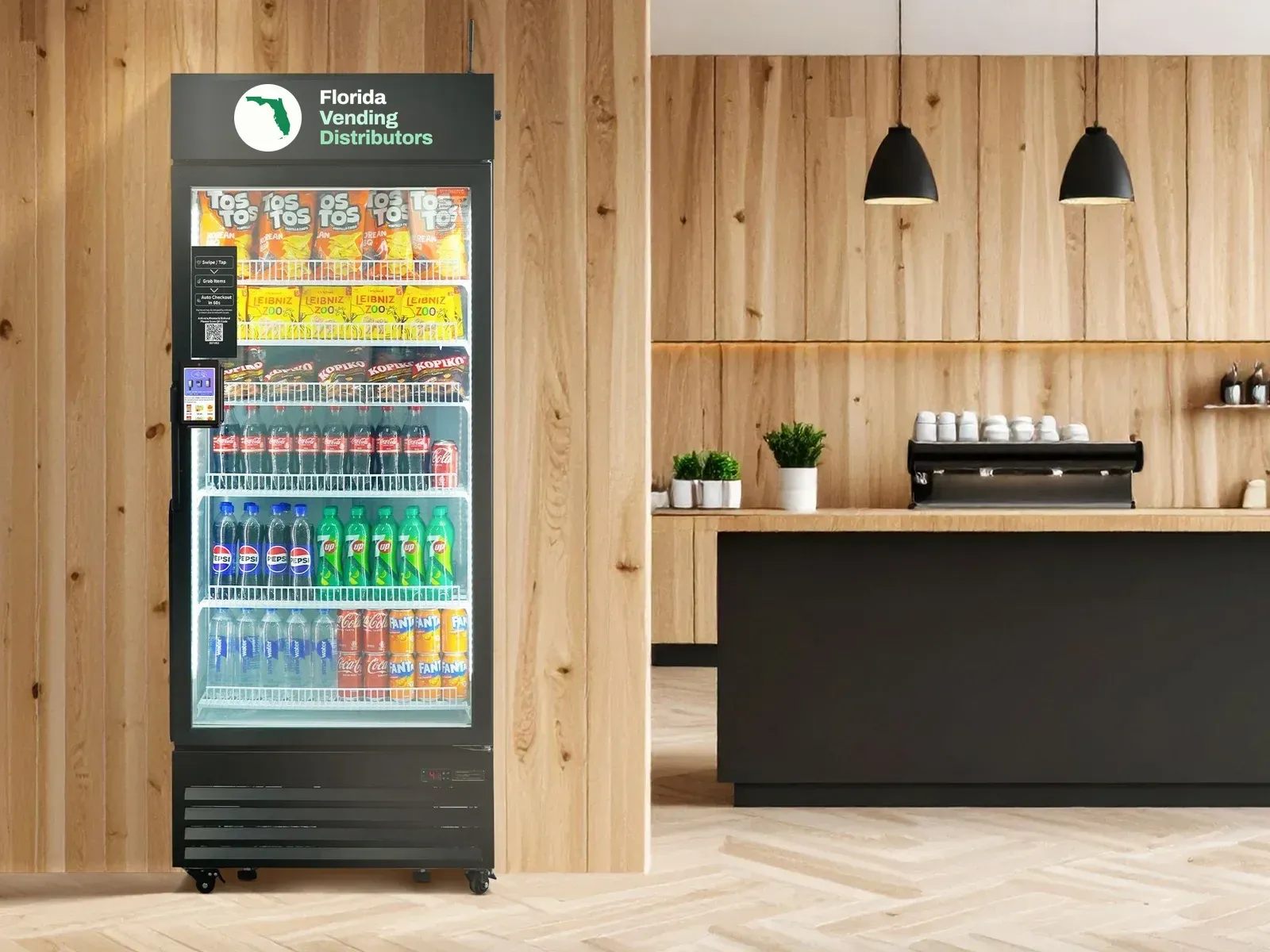
A refurbished spiral machine is usually the least expensive way to put a machine in a location; your rep quotes them by unit. A new HAHA AI smart cooler runs from $2,999 to $6,799. The cooler costs more up front, and pays that back only where people buy more per visit and the location supports fresh food. See the cost guide for the full breakdown.
Where each one wins
| AI smart cooler | Traditional machine | |
|---|---|---|
| Best locations | Offices, gyms, apartments, hotels, clinics, campuses | Warehouses, factories, laundromats, auto shops |
| Payment | Card and phone only | Cash, coins, and cards with a reader |
| Fresh food | Yes | Limited |
| Items per visit | As many as they want | Usually one |
| Data | Every sale, live | Only with added telemetry |
| Up-front cost | Higher | Lower |
The takeaway
AI doesn’t make traditional machines obsolete. It opens up locations and products that spirals can’t serve well. Many operators keep their refurbished machines in rough, cash-heavy spots and put AI coolers where people want more than a bag of chips.
Want to see both? Our Orlando showroom has HAHA coolers you can open and restock yourself. Book a visit, or ask your rep which fits your next location.